


1. Liquid Membranes
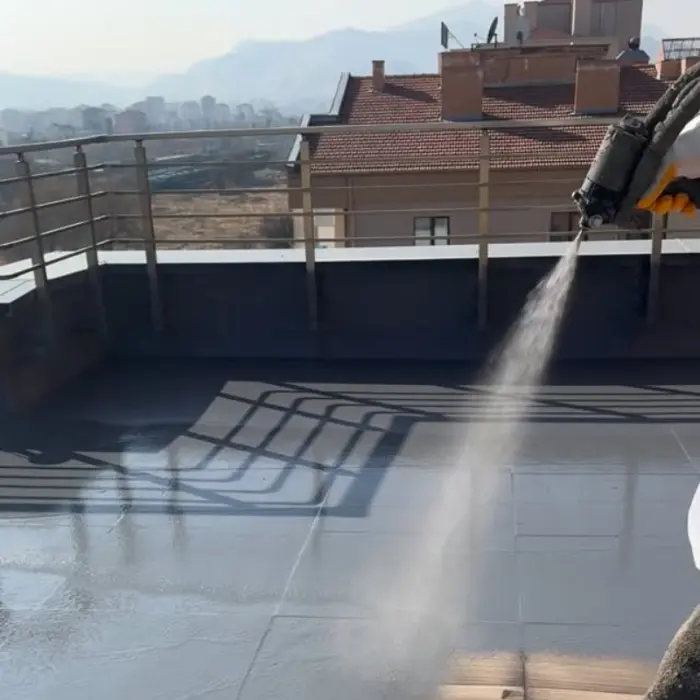
Liquid membrane systems are among the most modern and versatile waterproofing solutions available today. These materials are applied in liquid form directly onto the surface and, once cured, they form a seamless, continuous, and highly elastic protective layer. Typically composed of acrylic, polyurethane, or bitumen-based resins, liquid membranes have the advantage of adapting perfectly to the surface they are applied to.
Because they are in liquid form during application, they can easily penetrate and cover even the most complex and hard-to-reach areas of a roof, such as corners, drainage outlets, joints, and around chimneys. This makes them especially suitable for structures with intricate architectural details where traditional sheet-based systems may struggle to provide full coverage.
One of the most significant advantages of liquid membranes is their ability to fully adhere to the substrate, creating a monolithic layer without joints or seams. Once cured, they take on a rubber-like, flexible structure that can accommodate building movements, thermal expansion, and contraction without cracking or tearing. This elasticity significantly reduces the risk of long-term damage.
In addition, many liquid membrane products are manufactured with UV-resistant properties, allowing them to withstand prolonged exposure to sunlight without degrading. This feature extends the lifespan of the waterproofing system and ensures consistent performance over time.
Key application considerations:
- The surface must be clean, dry, and free of dust, grease, and loose particles before application
- Multi-layer application is strongly recommended instead of a single coat
- Reinforcement mesh placed between layers can significantly improve durability and longevity
Liquid membranes are widely used in terrace roofs, balconies, and walkable surfaces, particularly as an under-tile waterproofing solution. When applied correctly, they provide excellent protection against water infiltration without adding significant weight to the structure.
2. Bitumen-Based Materials
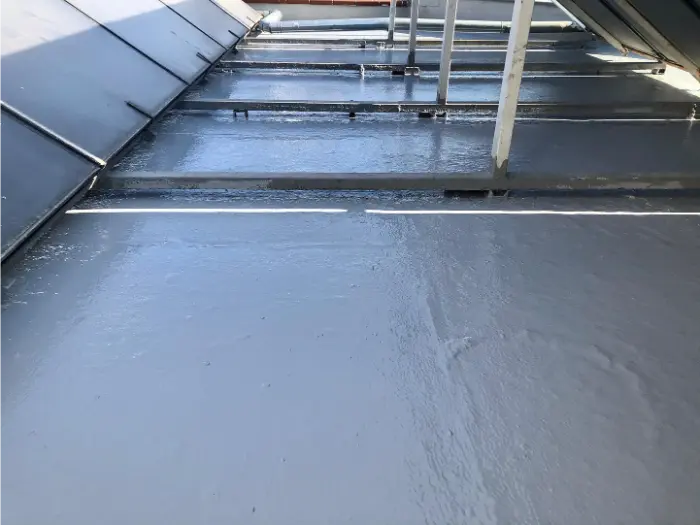
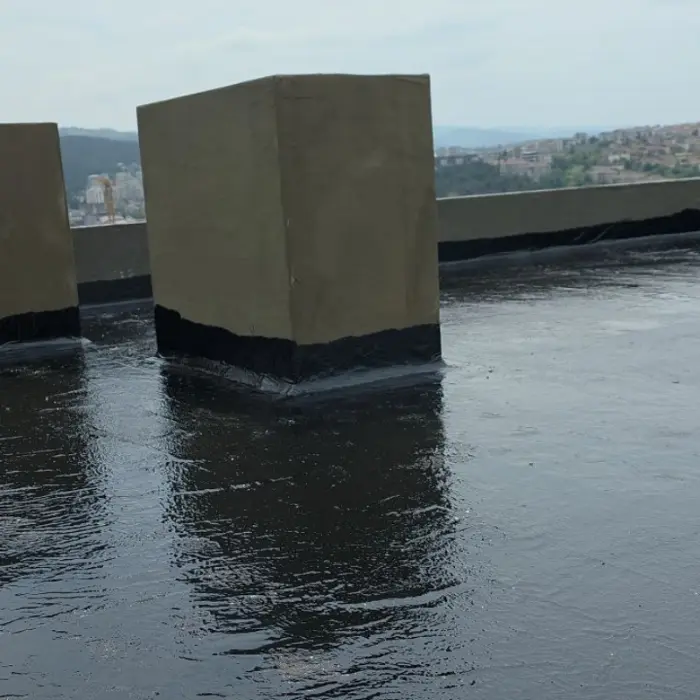
Bitumen-based waterproofing materials are among the oldest and most trusted solutions in the construction industry. Derived from petroleum, bitumen naturally possesses strong water-resistant properties, making it an ideal material for preventing water penetration. Over time, these materials have been enhanced with polymer additives such as APP (Atactic Polypropylene) and SBS (Styrene-Butadiene-Styrene), resulting in improved flexibility, durability, and resistance to environmental conditions.
Today, bitumen-based systems are available in several different forms, each designed for specific applications. Liquid bitumen is often used as a primer or moisture barrier, while bituminous membranes—typically supplied in rolls—serve as the primary waterproofing layer. Bitumen-based sealants and pastes are commonly used for repairing cracks, joints, and other vulnerable areas.
This versatility allows bitumen systems to be adapted to a wide range of project requirements, from simple residential roofs to large-scale industrial structures.
Main advantages of bitumen-based systems include:
- Excellent adhesion to various surfaces such as concrete, metal, and wood
- Strong resistance to both high temperatures and freezing conditions
- Cost-effectiveness compared to many alternative systems
- Ease of maintenance and repair, allowing localized fixes without replacing the entire system
However, in order to maximize their lifespan, bitumen materials must be protected from direct UV exposure. Prolonged sunlight can cause the material to dry out and crack over time. This issue can be prevented by applying protective layers such as gravel покрытия, ceramic tiles, or reflective UV-resistant coatings.
When properly installed and maintained, bitumen-based waterproofing systems act as a highly reliable barrier, effectively preventing water penetration at the uppermost level of a building.
3. Polyurethane Foam (SPF)
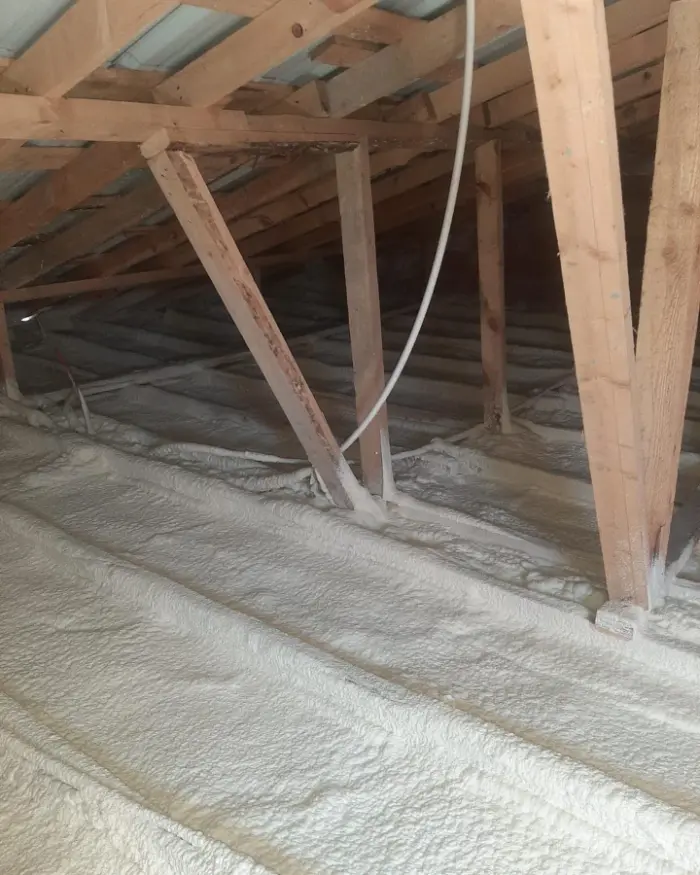
Spray polyurethane foam (SPF) is an advanced insulation technology that provides both thermal insulation and waterproofing in a single application. During installation, the material is sprayed onto the roof in liquid form and rapidly expands—up to 30 to 40 times its original volume—within seconds. This expansion allows it to fill all cracks, gaps, and voids, creating a completely seamless and airtight layer.
One of the most notable advantages of SPF is its ability to eliminate thermal bridges, which are weak points in the insulation where heat can easily escape or enter. By forming a continuous layer, SPF ensures consistent insulation performance across the entire surface.
In terms of thermal efficiency, polyurethane foam is considered one of the most effective insulation materials available, with a very low thermal conductivity value. This means it helps retain heat during winter and keeps interiors cool during summer, resulting in significant energy savings.
Additionally, its closed-cell structure provides excellent resistance to water penetration, making it highly effective as a waterproofing solution.
Key advantages and applications:
- Rapid application, even on very large surfaces
- Lightweight structure that does not add significant load to the building
- Strong adhesion to a wide variety of surfaces, including metal, concrete, and wood
Despite its many benefits, SPF has one notable limitation: sensitivity to ultraviolet (UV) radiation. When exposed to direct sunlight over time, the material can degrade and become brittle. Therefore, it is essential to apply a պաշտպանիչ coating—such as UV-resistant paint or liquid membrane—over the foam when used on exposed roofs. With proper protection, SPF can provide a long-lasting and highly efficient insulation solution.
4. Polyurea Waterproofing Systems
Polyurea is widely regarded as one of the most advanced and high-performance waterproofing technologies available today. This system consists of a two-component material that is applied using specialized high-pressure spray equipment at elevated temperatures. One of its most remarkable features is its extremely fast curing time—typically between 5 and 15 seconds—allowing the surface to become usable almost immediately after application.
Once cured, polyurea forms a highly durable, flexible, and seamless coating that adheres strongly to the substrate. Its elasticity can reach up to 400%, enabling it to absorb structural movements and prevent cracking or failure over time.
Polyurea also offers exceptional chemical resistance, making it suitable for use in highly demanding environments such as industrial facilities, wastewater treatment plants, and chemical storage areas. When applied on roofs, it creates a continuous, impermeable barrier that leaves no weak points for water infiltration.
Important note: Polyurea application requires professional expertise and specialized equipment. Factors such as temperature control, surface preparation, and proper calibration of machinery directly affect the quality and performance of the final result.
Reasons to choose polyurea:
- Extremely fast return to service, minimizing downtime in areas like terraces or parking decks
- Outstanding resistance to abrasion, impact, and mechanical stress
- Ability to be applied in a wide range of environmental conditions, including extreme temperatures and humidity
Although polyurea systems are generally more expensive compared to other waterproofing methods, their long lifespan, minimal maintenance requirements, and superior performance make them one of the most cost-effective investments in the long term.