




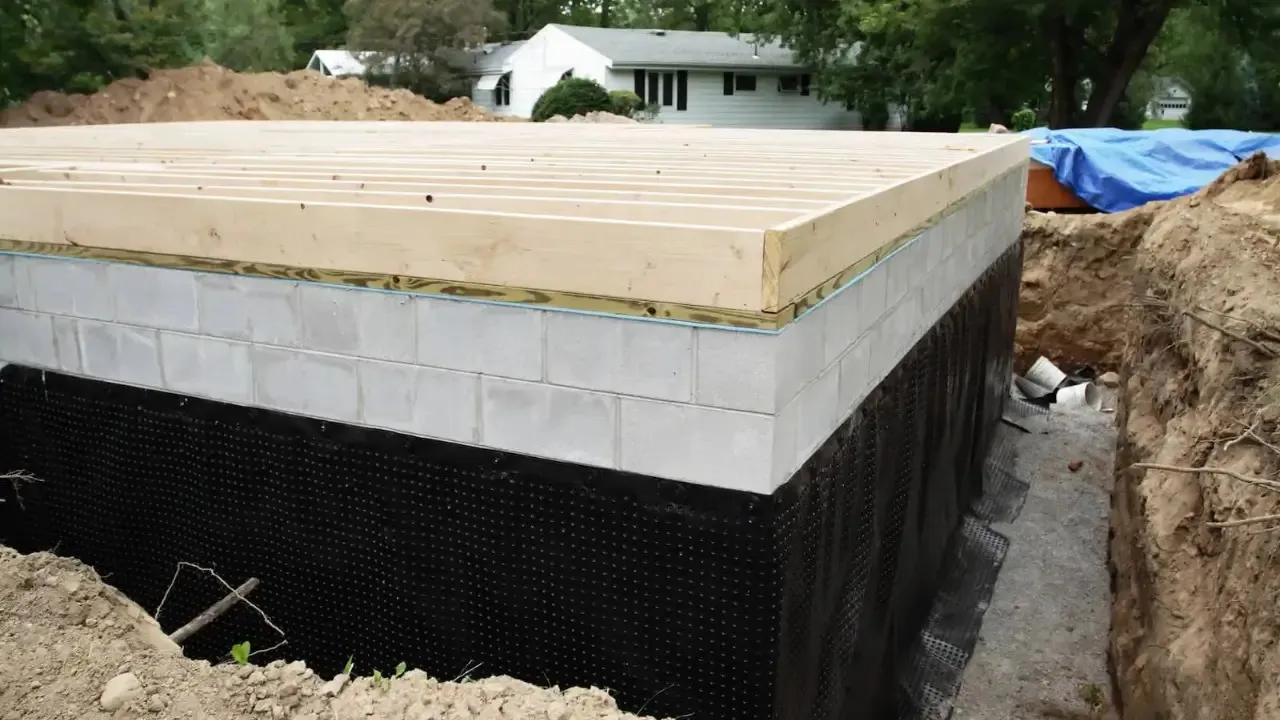
The Importance of Foundation Waterproofing
The foundation is the most critical part of any structure, as it carries the entire load of the building and remains in direct contact with the ground. For this reason, it is the first area exposed to external factors such as groundwater, soil moisture, chemical effects, and hydrostatic pressure.
Although concrete surfaces may appear solid and impermeable at first glance, they actually have a porous structure at a microscopic level. These pores allow water to penetrate over time. Especially in regions with heavy rainfall or high groundwater levels, this can lead to serious structural problems.
In foundations without proper waterproofing, the following issues may occur over time:
- Corrosion (rusting) of reinforced steel
- Reduction in the structural strength of concrete
- Formation of cracks in foundation and retaining walls
- Dampness-related odors
- Mold and fungal growth
- Decreased indoor air quality
- Structural deformation and long-term safety risks
For these reasons, foundation waterproofing is not a luxury—it is a necessity. Moreover, accessing and repairing foundation-level issues after construction is extremely difficult and costly. Therefore, the most effective approach is to apply waterproofing properly during the early stages of construction.
When Should Foundation Waterproofing Be Applied?
Foundation waterproofing should be carried out during the early phases of construction. Typically, it is applied after excavation is completed and the raft foundation concrete has been poured. At this stage, waterproofing acts as a long-term protective barrier for the entire building.
Waterproofing systems are generally categorized into two main types:
Positive-Side Waterproofing: Applied on the exterior surface where water comes into contact. This is the most effective and long-lasting solution.
Negative-Side Waterproofing: Applied from the interior when external access is not possible. However, this method is usually considered a temporary or supportive solution.
How to Apply Foundation Waterproofing (Step by Step)
1. Surface Preparation
The success of waterproofing largely depends on proper surface preparation. The surface must be:
- Clean, dry, and structurally sound
- Free from dust, oil, and loose particles
- Smooth and even
If necessary, repair mortars should be used to correct surface imperfections. Neglecting this step can significantly reduce the effectiveness of even the highest-quality materials.
2. Treatment of Joints and Critical Points
Construction joints, cold joints, and expansion joints are the most vulnerable areas for water leakage. These areas must be carefully treated using:
- PVC or TPE waterstops
- Elastomeric sealants
- Polyurethane injection systems
Injection methods are especially effective for sealing active water leaks.
3. Primer Application
Primers improve the adhesion of waterproofing materials to the surface. Depending on the system used:
- Polyurethane primers are used for PU-based systems
- Epoxy primers are used for epoxy and polyurea systems
The primer must be allowed to fully cure before proceeding to the next step.
4. Application of Waterproofing Layer
Several waterproofing systems can be used for foundations:
a) Bitumen-Based Membranes
- Cost-effective solutions
- Easy to apply
- Require protection due to low UV resistance
b) Cement-Based Crystalline Waterproofing
- Penetrates concrete and forms crystal structures
- Can be applied both internally and externally
- Resistant to negative water pressure
c) Polyurethane-Based Waterproofing
- High elasticity
- Excellent crack-bridging capability
- Long-lasting and durable
d) Polyurea Systems
- Spray-applied and cures within seconds
- Provides 100% waterproofing
- One of the highest-performance systems available
- Ideal for industrial and professional applications
5. Protection Layer
After waterproofing is applied, it must be protected from damage during backfilling.
Protection methods include:
- Drainage boards
- Geotextile layers
- Protection panels
- Protective screed layers
This step is essential to ensure the longevity of the waterproofing system.
The Importance of Drainage Systems
Waterproofing alone is not sufficient. Water must also be effectively drained away from the structure.
For this purpose:
- Perforated drainage pipes are installed
- Pipes are wrapped with geotextile fabric
- Connected to proper discharge systems
This prevents water accumulation around the foundation.
Common Mistakes in Foundation Waterproofing
- Inadequate surface preparation
- Applying only a single coat
- Ignoring curing times between layers
- Lack of proper drainage systems
- Application by unqualified personnel
These mistakes can lead to premature failure of the waterproofing system.
Conclusion: Strong Structures Start with Proper Waterproofing
Foundation waterproofing is one of the most critical factors that determine the lifespan of a building. With the right material selection, proper application techniques, and attention to detail:
- Structural durability increases
- Maintenance costs decrease
- Indoor comfort improves
- Long-term economic benefits are achieved