




Key Areas That Require Waterproofing in a Building (Comprehensive Technical Guide)
In modern construction, waterproofing is not a secondary detail but a fundamental requirement that determines the lifespan, safety, and performance of a structure. Buildings that are exposed to continuous environmental effects—especially rain, groundwater, humidity, and temperature fluctuations—require carefully designed waterproofing systems in multiple critical zones.
In this article, we will examine in detail the main structural and functional areas of a building where waterproofing is essential, the risks of neglecting these areas, and the most commonly used technical solutions in the construction industry.
1. Foundation and Retaining Wall Waterproofing
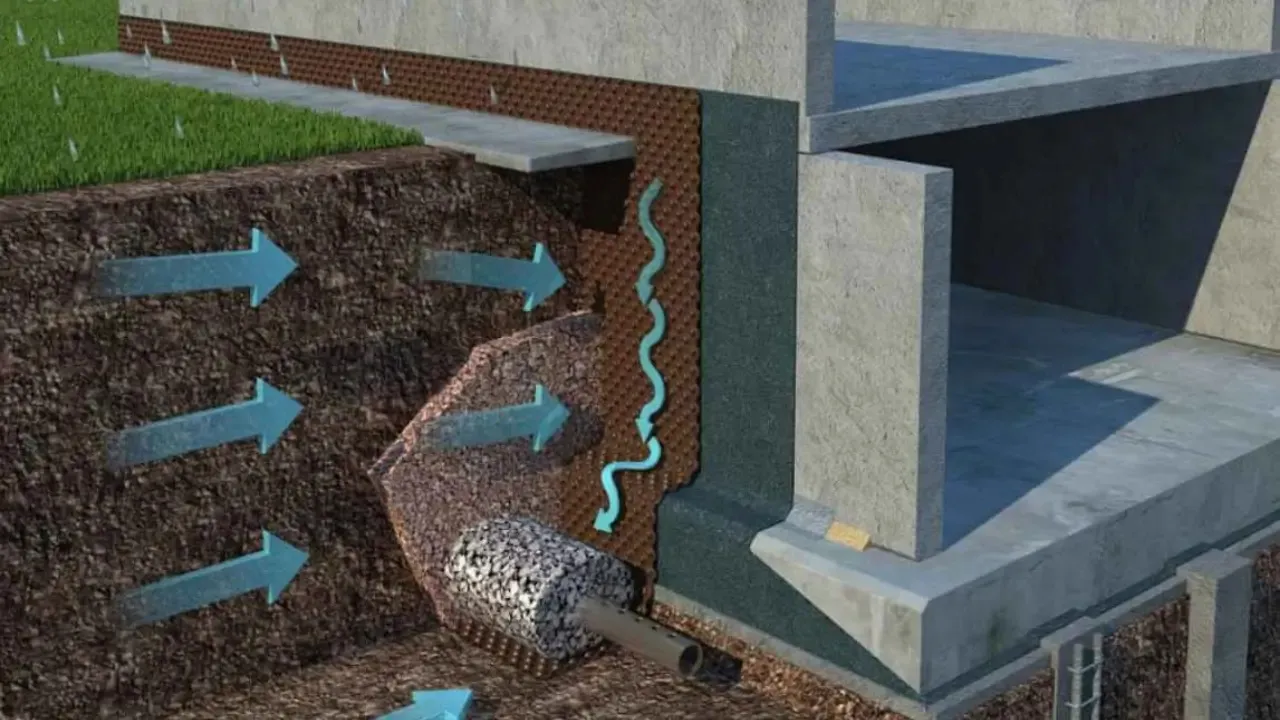
The foundation is the most critical structural element of any building, as it transfers all loads safely to the ground. However, it is also the area most exposed to groundwater, soil moisture, capillary water rise, and poor drainage conditions.
When waterproofing is not properly applied in foundation and retaining wall systems, water gradually penetrates through concrete pores and reaches the reinforcement steel. This triggers corrosion, which reduces the diameter of steel bars and weakens their load-bearing capacity. Over time, this leads to cracking, spalling of concrete cover, and structural deterioration.
In addition, moisture migration in basement areas leads to persistent dampness, mold formation, and poor indoor air quality.
Typical foundation waterproofing systems include:
- Polyurethane-based liquid membranes with high elasticity
- Bituminous membranes applied as sheets or coatings
- Crystalline waterproofing systems that react with concrete
- Cementitious flexible waterproofing mortars
Proper application usually requires external protection of retaining walls, full membrane wrapping (tanking systems), and integration with perimeter drainage systems to divert groundwater away from the structure.
2. Roof and Terrace Waterproofing Systems
Roofs and terraces are continuously exposed to harsh environmental conditions such as heavy rainfall, snow loads, wind pressure, and ultraviolet radiation. These conditions make them one of the most failure-prone areas in buildings when waterproofing is insufficient or improperly installed.
Water infiltration through roof systems can damage reinforced concrete slabs, cause insulation failure, and result in interior ceiling leaks, mold growth, and thermal inefficiency.
Flat and terrace roofs are especially vulnerable due to water ponding. Therefore, slope design (fall formation) is a critical component of waterproofing strategy. Without proper drainage, even high-quality materials can fail prematurely.
Common waterproofing systems used in roofing applications include:
- Polyurea spray coatings with seamless application and high durability
- Polymer-modified bituminous membranes for long-term resistance
- UV-stable liquid-applied membranes for exposed surfaces
- Transparent waterproofing systems for tiled terraces
For tiled terrace systems, flexible under-tile waterproofing layers are essential to accommodate structural movement and thermal expansion.
3. Bathroom, Kitchen, and Wet Area Waterproofing
Wet areas are defined as spaces where water is continuously used and surface contact with moisture is unavoidable. These include bathrooms, kitchens, laundry rooms, and utility areas.
Due to constant exposure to water, these zones are among the most common sources of leakage problems in residential and commercial buildings. Improper waterproofing in these areas often results in water seepage into lower floors, tile detachment, wall swelling, and mold formation.
A correctly designed wet area waterproofing system must include:
- Vertical waterproofing extended at least 30 cm above floor level
- Detailed sealing around pipe penetrations, floor drains, and corner joints
- Fully continuous under-tile waterproofing membranes without interruption
Materials commonly used in wet areas include:
- Two-component cementitious flexible waterproofing coatings
- Liquid-applied waterproofing membranes
- Polyurethane-enhanced sealing systems for high flexibility
In wet areas, workmanship quality is just as important as material selection, since improper application can lead to system failure even when high-quality products are used.
4. Balcony and Overhang Waterproofing
Balconies and architectural overhangs are directly exposed to external weather conditions, making them highly susceptible to water infiltration and freeze-thaw damage cycles.
When waterproofing is absent or inadequate, water can penetrate beneath ceramic tiles and cause structural damage through expansion during freezing conditions. This leads to tile cracking, detachment, and long-term deterioration of the concrete substrate.
Furthermore, water ingress in balcony systems can spread to façade surfaces and adjacent interior spaces, creating both aesthetic and structural issues.
Key design and application principles include:
- Proper slope formation to ensure effective water drainage
- Full waterproofing layer beneath ceramic or stone finishes
- Reinforced detailing at railing anchors and wall connections
Commonly used materials:
- UV-resistant elastomeric waterproofing coatings
- Transparent liquid membranes for exposed surfaces
- Flexible crack-bridging under-tile systems
Proper balcony waterproofing significantly extends the lifespan of both structural and decorative components.
5. Swimming Pool and Water Tank Waterproofing
Structures such as swimming pools, water reservoirs, and storage tanks are permanently exposed to hydrostatic pressure. Unlike other building components, these systems must resist both positive pressure (water inside) and negative pressure (groundwater outside).
Failure in waterproofing these structures leads not only to leakage but also to contamination risks, structural weakening, and operational inefficiencies.
Advanced waterproofing systems for these applications include:
- Crystalline waterproofing mortars capable of self-sealing microcracks
- Epoxy-based coatings for chemical and water resistance
- Polyurethane and hybrid flexible membrane systems
- Certified potable-water-safe waterproofing products
Before application, surface preparation, moisture content analysis, and substrate condition assessment are critical steps. After completion, water tightness testing (flood testing) must be performed to verify system integrity.
Conclusion: Waterproofing as a Structural Necessity
The durability of a building is not determined solely by its structural framework, but also by how effectively it is protected against environmental stress factors—especially water.
Water is one of the most destructive agents in construction, capable of causing slow but irreversible damage over time. Therefore, every building must integrate waterproofing as a core design and construction principle.
A complete waterproofing strategy should include:
- Robust foundation protection systems
- Weather-resistant roof and terrace membranes
- Highly detailed wet area sealing systems
- Durable external balcony protection
- Specialized solutions for water-retaining structures
At Dryfix, we develop high-performance waterproofing systems designed for every critical area of a structure. Our solutions are engineered not only to prevent water ingress but also to protect buildings against mold formation, structural deterioration, and long-term environmental damage.