





Balcony and Terrace Waterproofing Guide
Why Are Balconies and Terraces Critical Areas?
Balconies and terraces are among the most vulnerable parts of a structure, as they are directly exposed to external environmental conditions. Factors such as rain, snow, frost, and sudden temperature fluctuations can, over time, lead to serious waterproofing issues at surface levels and especially at joint points.
When waterproofing is missing or incorrectly applied, water that penetrates into the structure does not only cause surface-level damage. It can also result in moisture formation, mold growth, surface deterioration, and even structural damage in reinforced concrete elements. Therefore, applying proper waterproofing systems in balconies and terraces is essential for ensuring the durability and longevity of the building.
What Will You Learn in This Guide?
In this guide, you will find a comprehensive answer to the question “how to waterproof a balcony?” while also exploring effective solutions for terrace water leakage problems. Additionally, the correct application steps and the importance of choosing professional-grade materials for long-lasting waterproofing performance will be explained in detail.
What Causes Water Leakage in Balconies and Terraces?
Even minor mistakes in balcony waterproofing applications can result in major costs over time. The main causes of water leakage are typically related to application errors, incorrect material selection, or neglected detailing.
Improper Slope Application
If sufficient slope is not provided on balcony or terrace surfaces, rainwater accumulates instead of being properly drained. Over time, this leads to water infiltration and damage in the lower levels of the building.
Cracks in Concrete Surfaces
Cracks that develop in concrete surfaces create pathways for water to penetrate. Even hairline cracks that are barely visible can lead to significant structural problems.
Tile Joint (Grout) Failures
Ceramic tiles alone are not fully waterproof. Over time, grout joints can wear out or open up, allowing water to seep beneath the tiles and damage the underlying layers.
Neglecting Edge and Corner Details
Edges and corner joints are the most sensitive areas affected by structural movement. If proper waterproofing tapes or reinforcements are not applied in these regions, water leakage becomes inevitable.
Incorrect Product Selection and Single-Layer Application
Materials used in outdoor areas must be UV-resistant, flexible, and capable of withstanding temperature variations. In addition, single-layer applications are usually insufficient and tend to fail quickly under environmental stress.
Surface Preparation: The Foundation of Effective Waterproofing
One of the most critical steps in a successful waterproofing system is proper surface preparation. Even the highest-quality materials cannot perform effectively if applied on an improperly prepared surface.
Surface Cleaning
Before application, all dust, oil, loose particles, and old coatings must be completely removed. A clean and stable surface ensures proper adhesion of the waterproofing material.
Crack Repair
All cracks in concrete surfaces should be repaired using appropriate repair mortars. This prevents water penetration and ensures a long-lasting solution.
Primer Application
Applying the correct primer is essential to regulate surface absorbency and improve adhesion. Proper priming directly enhances the performance of the waterproofing system.
Choosing the Right Waterproofing Products
Selecting the appropriate waterproofing product is key to achieving long-term protection. Materials used in outdoor environments should be evaluated based on UV resistance, elasticity, mechanical strength, and ease of application.
With the right product selection, effective results can be achieved in both new construction and renovation projects. Flexible, multi-layer systems are especially recommended for durable and reliable performance.
The Importance of Edge and Joint Detailing
A significant portion of water leakage problems in balconies and terraces originates from edge and joint areas. Therefore, detailing these sections properly is essential for a successful waterproofing system.
- Elastic sealing solutions should be used to accommodate structural movement.
- Corner joints must be reinforced with appropriate systems.
- Construction joints should be sealed using reliable waterproofing methods.
What Is the Correct Application Sequence?
For an effective waterproofing system, the application steps must be followed in the correct order:
- Surface defects and cracks are repaired.
- A suitable primer is applied to strengthen the surface.
- Edge and joint details are sealed using appropriate materials.
- Waterproofing material is applied in at least two layers.
- If necessary, finishing coatings such as tiles are installed.
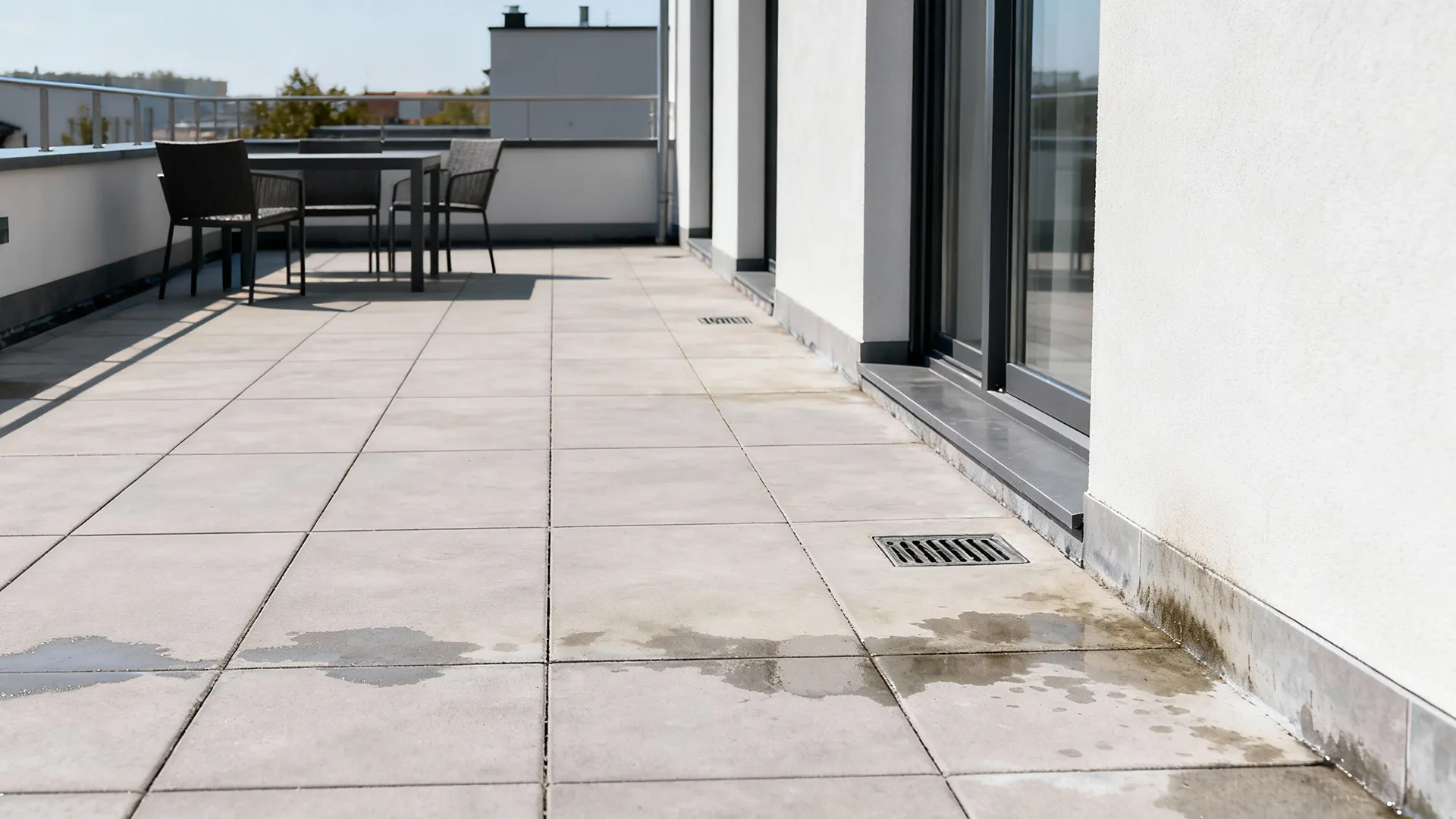
Common Waterproofing Mistakes
Many balconies and terraces experience recurring issues due to incorrect applications. The most common mistakes include:
- Applying only a single layer of waterproofing
- Ignoring edge and joint details
- Applying materials on wet or damp surfaces
- Choosing unsuitable products for the environment
These mistakes can lead to increased costs and serious structural damage over time.
Frequently Asked Questions
How is balcony waterproofing done?
A proper application involves preparing the surface, repairing cracks, applying primer, and then applying the waterproofing material in at least two layers. If needed, finishing materials such as tiles can be installed afterward.
What is the best solution for terrace water leakage?
The source of the problem must first be identified. Then, suitable materials and a comprehensive waterproofing system should be applied based on the terrace conditions.
Why is waterproofing so important?
Because balconies and terraces are constantly exposed to environmental factors such as rain, snow, and sunlight. Without proper waterproofing, both the lower floors and the structural integrity of the building can be compromised.