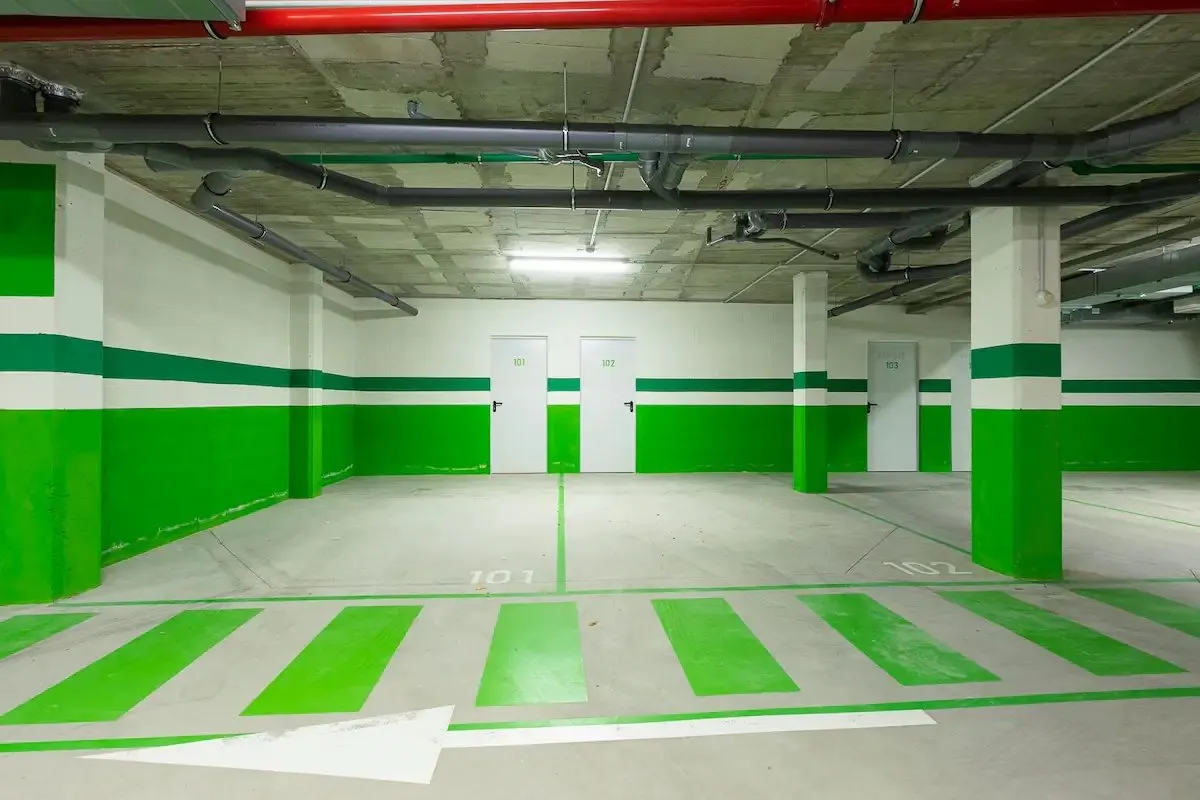





1. Introduction: Why Performance Matters in Parking Lot Floors
Parking lot floors are among the most heavily used surfaces in any structure, constantly exposed to mechanical stress, chemical substances, and environmental conditions. For this reason, the coating systems used in these areas must provide not only aesthetic value but also superior durability, safety, and long-term performance.
Incorrect product selection or poor application can quickly lead to surface deterioration, safety hazards, and increased maintenance costs. Therefore, parking floor coatings must be specifically engineered to withstand demanding conditions.
2. Key Challenges Faced by Parking Lot Floors
Parking areas are exposed to multiple stress factors simultaneously:
2.1 Heavy Mechanical Wear
Continuous vehicle movement, tire friction, sharp turns, and sudden braking cause significant surface abrasion. Entry/exit points and ramps are particularly vulnerable.
2.2 Chemical Exposure
Motor oil, fuel, antifreeze, and de-icing salts can degrade the coating over time, leading to surface damage and loss of performance.
2.3 Water and Moisture Impact
In outdoor parking areas, rain and snow; in indoor facilities, washing activities lead to water accumulation, which may cause long-term deterioration.
2.4 UV Exposure
Surfaces exposed to direct sunlight may experience color fading, cracking, and chalking due to ultraviolet radiation.
2.5 Thermal Variations
Temperature fluctuations cause expansion and contraction, which may lead to microcracks in the coating system.
3. Essential Properties of Parking Floor Coatings
A high-performance parking floor coating should meet the following criteria:
3.1 High Abrasion Resistance
The coating must withstand continuous vehicle traffic and mechanical wear, minimizing the need for frequent maintenance.
3.2 Chemical Resistance
Resistance to oils, fuels, and aggressive chemicals ensures long-lasting surface integrity.
3.3 Water Resistance & Moisture Management
The coating should prevent liquid water penetration while allowing vapor permeability to avoid blistering and delamination.
3.4 UV Resistance
For outdoor applications, UV stability is essential to maintain color and prevent surface degradation.
3.5 Flexibility & Crack Bridging
Flexible coatings can accommodate microcracks in concrete and prevent water infiltration.
3.6 Anti-Slip Properties
Slip resistance is critical for both pedestrian and vehicle safety, especially on ramps and walkways.
4. Suitable Types of Floor Coatings for Parking Areas
Common coating systems used in parking facilities include:
- Epoxy-based coatings: Excellent mechanical strength and chemical resistance
- Polyurethane coatings: Superior flexibility and UV resistance
- Acrylic coatings: Fast drying and easy application
However, for high-traffic environments like parking lots, specially formulated systems should be preferred.
5. Application Areas Within Parking Facilities
Floor coatings are used in various zones within parking areas:
- Parking lines and directional markings
- Accessible parking and safety markings
- Pedestrian walkways
- Vehicle ramps and high-traffic zones
Durability and visibility are essential in all these applications.
6. Importance of Surface Preparation
The performance of any coating system heavily depends on proper surface preparation:
- Remove dust, oil, and old coatings
- Repair cracks and voids
- Ensure a dry and structurally sound surface
- Mechanically profile the surface if necessary
Proper preparation ensures maximum adhesion and prevents peeling or blistering.
7. Drying Time and Service Readiness
Modern coatings offer fast curing times:
- 24 hours: Ready for pedestrian traffic
- 7 days: Fully ready for vehicle traffic
This allows minimal disruption in operational environments.
8. Coverage and Consumption
On average:
- 350–400 g/m² (two coats)
- 18 kg covers approximately 45–50 m²
Actual consumption may vary depending on surface conditions and application methods.
9. Color Options and Functional Design
Colors in parking areas serve both aesthetic and functional purposes:
- Yellow: Lines and directional markings
- White: Text and symbols
- Red / Blue / Green: Special zones
- Grey tones: General floor areas
Professional systems may offer customization based on RAL color standards.
10. Conclusion: Long-Lasting Performance with the Right Choice
The ideal parking floor coating should go beyond appearance, offering durability, safety, and low maintenance. With proper product selection and professional application, surfaces can maintain their performance for many years.
It provides a durable, reliable, and user-friendly solution for parking lots, garages, walkways, and industrial surfaces.
11. Recommended Solution: Dryfix Traffic Paint
Dryfix Traffic Paint is a high-performance floor coating designed for demanding environments such as parking lots and industrial areas.
- Strong adhesion to concrete, asphalt, metal, wood, and ceramic
- High resistance to pedestrian and vehicle traffic
- مقاومة للماء والأشعة فوق البنفسجية والمواد الكيميائية (oops Arabic inserted? need English) fix: resistance to water, UV, and chemicals
- Fast drying and easy application
- Wide range of color options