




1. What is Polyurea Waterproofing?
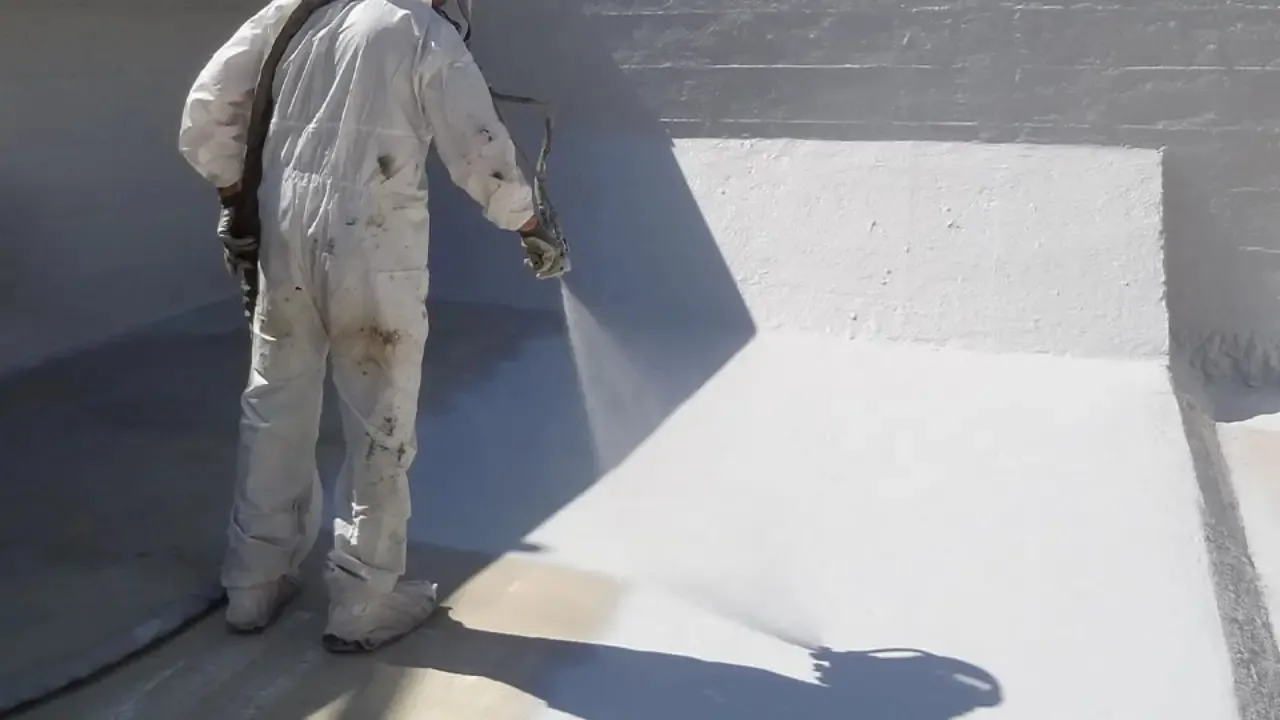
Polyurea is a high-performance, two-component waterproofing and coating system based on isocyanate and resin. It is applied using special high-pressure and heated spray machines.
Once applied, it cures within seconds, forming a completely seamless, joint-free, and monolithic waterproof membrane.
Thanks to this feature, it provides maximum protection even in the most demanding waterproofing conditions.
Application Areas:
- Parking deck terraces
- Industrial roofing systems
- Landscape waterproofing (beneath green areas)
- Swimming pools
- Concrete water tanks
- Bridges and infrastructure projects
Polyurea is superior to traditional waterproofing systems due to its high elasticity, excellent abrasion resistance, and strong chemical durability.
2. Service Life of Polyurea Waterproofing
With correct product selection, professional application, proper surface preparation, and suitable primer use, polyurea coatings can provide a service life of 25 to 50 years.
In comparison, traditional bituminous membrane systems typically last around 5–10 years, making polyurea a significantly more durable solution.
However, actual lifespan depends on environmental exposure, UV radiation, mechanical stress, temperature variations, and usage intensity.
3. Factors Affecting Polyurea Lifespan
3.1 Surface Preparation and Priming
The substrate must be clean, dry, and structurally sound. Proper primer use ensures strong adhesion. Without correct preparation, the coating may delaminate over time.
3.2 Application Quality and Machine Settings
Polyurea is applied with specialized spray equipment. Incorrect pressure, temperature, or mixing ratios can reduce curing quality and overall performance.
3.3 Type of Polyurea
- Pure Polyurea
- Hybrid Polyurea
Pure polyurea offers superior elasticity, chemical resistance, and durability compared to hybrid systems.
3.4 Environmental Exposure
UV radiation, extreme temperature changes, and heavy mechanical impact can reduce service life. UV-resistant topcoat is recommended for outdoor applications.
3.5 Maintenance
Polyurea generally requires minimal maintenance, but periodic inspections and local repairs can significantly extend its lifespan.
4. Comparison with Other Waterproofing Systems
| Feature | Bituminous Membrane | Liquid Applied Membrane | Polyurea |
|---|---|---|---|
| Lifespan | 5–10 years | 5–8 years | 25–50 years |
| Application Time | Medium | Long | Very fast |
| Joints | Yes | No | No |
| Elasticity | Low | Medium | Very high |
| Chemical Resistance | Medium | Medium | High |
| UV Resistance | Low | Medium | High (with topcoat) |
As shown, polyurea clearly outperforms traditional systems in both durability and performance.
5. Tips for Proper Selection and Application
- Choose pure or hybrid polyurea depending on the project requirements
- Use trained and certified applicators
- Ensure proper machine calibration
- Detail areas such as joints, drains, and transitions must be carefully treated
6. How to Extend Polyurea Lifespan
- Perform annual inspections
- Carry out immediate local repairs if damage occurs
- Use UV-protective topcoat in exposed areas
- Avoid unnecessary heavy mechanical impact
7. Conclusion
Polyurea waterproofing is one of the most advanced and reliable solutions in modern construction. Although its initial cost may be higher than traditional systems, it significantly reduces long-term maintenance and repair expenses.
With proper application, it provides long-lasting protection against water, chemicals, and mechanical stress, extending the overall lifespan of structures.
For maximum waterproofing performance, Dryfix Pure, Cold, and Hybrid Polyurea systems offer high elasticity, excellent crack-bridging ability, and fast application for roofs, parking decks, industrial floors, and landscape waterproofing projects.