




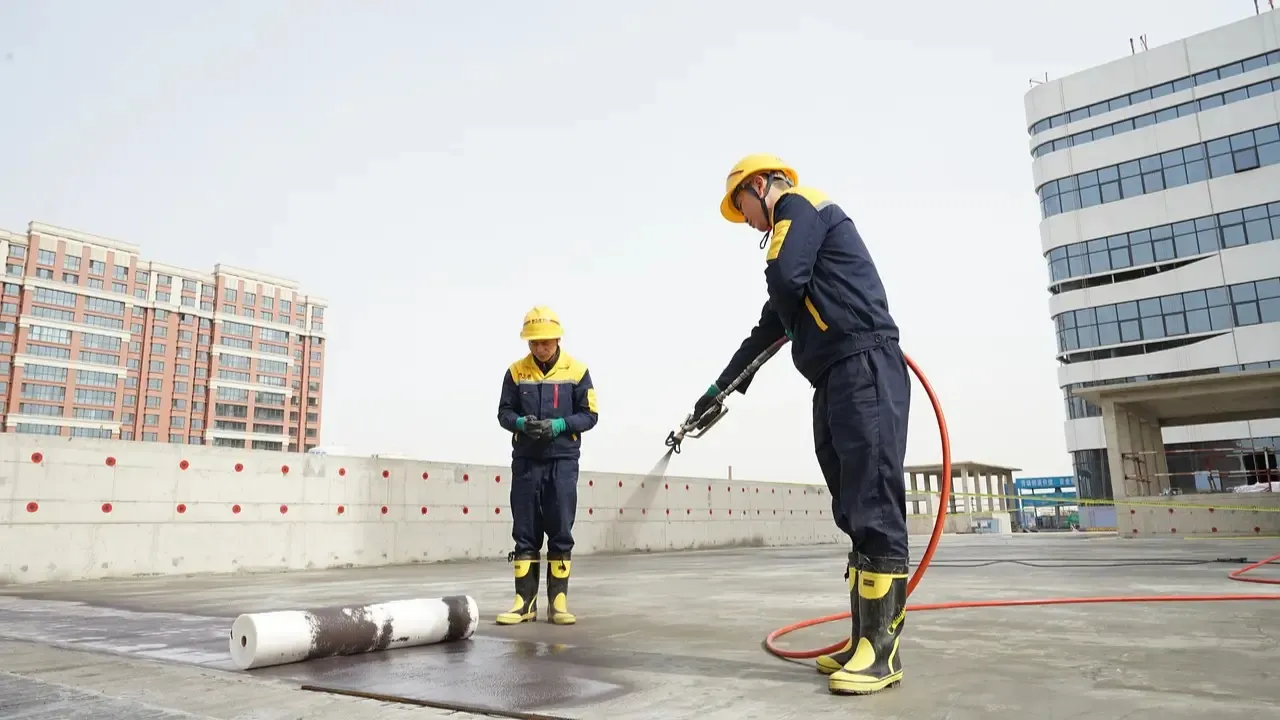
Common Waterproofing Materials
Choosing the right material is critical for the success of any waterproofing system. There are many different types of waterproofing materials on the market, and selecting the best one depends on the structure’s characteristics, budget, and required performance. The most commonly used waterproofing materials include the following:
1. Cement-Based Waterproofing Materials
Cement-based waterproofing materials are widely used in the construction industry as a reliable and cost-effective solution. They consist of cement, sand, and various chemical additives. When mixed with water, they form a slurry or mortar that can be easily applied to surfaces. After curing, they create a water-resistant layer that protects structures from moisture and water damage.
These materials are commonly used in basements, foundation walls, terraces, and water tanks. One of their biggest advantages is ease of application—they can be applied with a brush, roller, or spray. They also have strong adhesion to concrete surfaces. However, their flexibility is low, so they are not suitable for areas with active cracking or movement.
2. Crystalline Waterproofing Materials
Crystalline waterproofing systems work by penetrating the concrete and forming crystals within its capillary pores. These crystals block water passage and make the concrete permanently waterproof.
They are especially used in foundations, basements, tunnels, and water tanks. Their key advantage is long-term performance because the system remains active within the concrete structure itself. It also improves durability against freeze–thaw cycles and chemical exposure.
3. Polyurethane Injection Waterproofing
Polyurethane injection is a highly effective method used to seal cracks and voids in concrete structures. Liquid polyurethane is injected under pressure into cracks, where it expands and seals the gap completely.
It is widely used for basement leaks, tunnels, foundations, and retaining walls. Besides stopping water leakage, it also improves structural integrity by preventing crack propagation.
4. Polyurea Coatings
Polyurea is one of the most modern and high-performance waterproofing materials. It cures extremely fast—within seconds—making it ideal for large-scale or time-sensitive projects.
It is applied using spray equipment, forming a seamless and highly durable membrane. Polyurea is resistant to UV radiation, chemicals, and mechanical wear. It is commonly used in industrial floors, parking lots, water tanks, and roofs.
5. Elastomeric Resin-Based Waterproofing
These are liquid-applied coatings that form an elastic waterproof layer after curing. Thanks to their flexibility, they can bridge small cracks and adapt to structural movement.
They are resistant to UV rays and weather conditions, making them suitable for roofs, balconies, terraces, and water tanks.
6. Membrane Waterproofing Systems
Membranes are among the most widely used waterproofing materials. They are produced in different types such as bituminous membranes, PVC membranes, EPDM membranes, and TPO membranes.
Membranes create a continuous barrier that prevents water penetration. They are commonly used in foundations, roofs, terraces, balconies, and underground structures. Their durability and long lifespan make them one of the most reliable waterproofing solutions.
7. Epoxy Floor Coatings
Epoxy coatings are two-component systems (resin + hardener) applied to concrete floors. They provide strong chemical resistance, abrasion resistance, and a smooth finish.
They are widely used in hospitals, factories, warehouses, laboratories, and parking areas. Epoxy coatings also act as a waterproof layer, protecting floors from moisture damage.
Summary
Each waterproofing material has its own advantages and ideal use cases. Cement-based systems are economical, crystalline systems offer long-term protection, membranes provide strong physical barriers, and advanced systems like polyurea and polyurethane offer high performance and durability.
Choosing the right material depends on environmental conditions, structural needs, and project budget.