




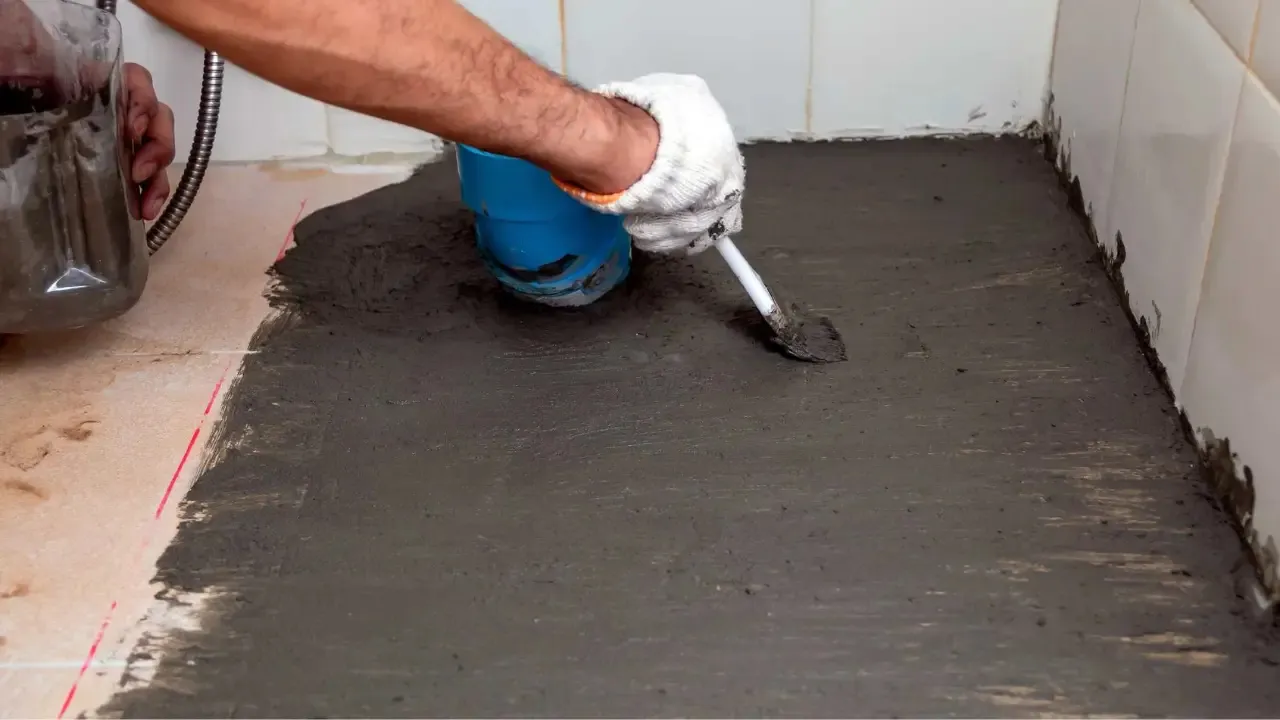
CERAMIC UNDER TILE WATERPROOFING APPLICATION
Ceramic-covered surfaces are widely used in wet areas such as bathrooms, kitchens, balconies, and terraces. However, ceramic tiles alone do not provide waterproofing. Water that penetrates through grout joints or beneath the tiles can, over time, cause serious damage to the underlying structure, leading to dampness, mold, and structural deterioration.
For this reason, ceramic under tile waterproofing is not just an aesthetic finishing step, but a critical protective layer for the durability and hygiene of the building.
1. SURFACE PREPARATION
The first and most important stage is proper surface preparation.
- The application surface must be completely cleaned from dust, oil, and dirt
- Loose particles and old coatings must be removed
- Cracks and voids should be repaired with suitable repair mortars
- The surface must be sound, stable, and properly leveled
A correctly prepared surface ensures full adhesion and long-term performance of the waterproofing system.
2. PRIMER APPLICATION
A suitable primer must be applied to the prepared surface.
The main purposes of the primer are:
- To balance surface absorbency
- To improve adhesion
- To ensure proper bonding of the waterproofing layer
- To reduce material consumption
Epoxy or acrylic-based primers are commonly preferred depending on the system.
3. CORNER DETAILING (SEALING TAPE APPLICATION)
Corners and junctions are the most vulnerable areas in waterproofing systems. Therefore, sealing tape application is essential.
- A waterproofing sealing tape is placed at wall–floor junctions
- It is fixed using elastic waterproofing material
- Both sides of the tape must be covered at least 5–10 cm
- This ensures a fully sealed and continuous waterproof barrier
4. LIQUID APPLIED WATERPROOFING LAYER
After the primer has dried, an elastic liquid waterproofing material is applied.
- Typically applied in two coats
- First coat is applied horizontally, second coat vertically
- Drying time between coats must follow manufacturer instructions
- Reinforcement mesh or fabric can be used where necessary
This layer forms the main waterproof barrier preventing water penetration into the concrete.
5. DRYING TIME AND CERAMIC INSTALLATION
Ceramic installation must only begin after the waterproofing layer has fully cured.
- Early tiling may damage the waterproofing system
- Suitable tile adhesives should be used
- Grout joints must be filled with water-resistant grout materials
- This ensures system integrity and long-term protection
6. RIGHT PRODUCT SELECTION FOR LONG-LASTING PROTECTION
Ceramic under tile waterproofing may seem like a simple step, but it is critical for the health of the structure. Improper application can lead to mold, dampness, and costly repairs in the future.
Therefore, the selected system must be:
- Flexible
- Crack-bridging
- Waterproof
- Suitable for under-tile applications
Dryfix products such as Full Flex 2K and Semi Flex provide high elasticity and durable waterproofing performance, forming a reliable barrier under ceramic surfaces.
7. CONCLUSION
Ceramic under tile waterproofing is an essential process for ensuring long-lasting, healthy, and durable buildings. With the correct materials and professional application, water leakage can be completely prevented, protecting the structure for many years.