



1. What is Waterproofing?
Waterproofing is the general term for systems and applications used to protect structures against water and moisture. Its main purpose is to prevent water from damaging building elements and to extend the lifespan of structures.
Waterproofing can be applied to foundations, roofs, terraces, basement walls, and all wet areas.
2. How is Waterproofing Done?
Waterproofing is applied through different systems depending on the area of use. The general process includes:
- Surface cleaning and preparation
- Repair of cracks and defects
- Primer application
- Application of the selected waterproofing material
- Second coat if required
- Curing and protection phase
3. What is Liquid Applied Waterproofing?
Liquid applied waterproofing is a system applied using brush, roller, or spray methods. After curing, it forms a seamless and flexible waterproof membrane.
4. How is Terrace Waterproofing Done?
Terrace waterproofing varies depending on usage conditions:
- Heavy pedestrian traffic terraces require high-durability systems
- Tile-covered terraces may require non-demolition solutions
- Open terraces require UV-resistant coatings
The main goal is to fully prevent water penetration and ensure long-lasting protection.
5. How is Foundation Wall Waterproofing Done?
Foundation wall waterproofing is applied on external surfaces in contact with soil. The process includes:
- Surface cleaning
- Repair of cracks and voids
- Primer application
- Application of bituminous or high-performance two-component systems
6. How is Foundation Waterproofing Done?
Foundation waterproofing is one of the most critical applications, as it is exposed to groundwater.
Steps include:
- Preparing the concrete surface
- Primer application
- Applying bitumen, polyurethane, or cement-based systems
- Providing mechanical protection with protection boards
7. Bituminous Waterproofing Materials
Bituminous products are traditional waterproofing materials widely used for many years.
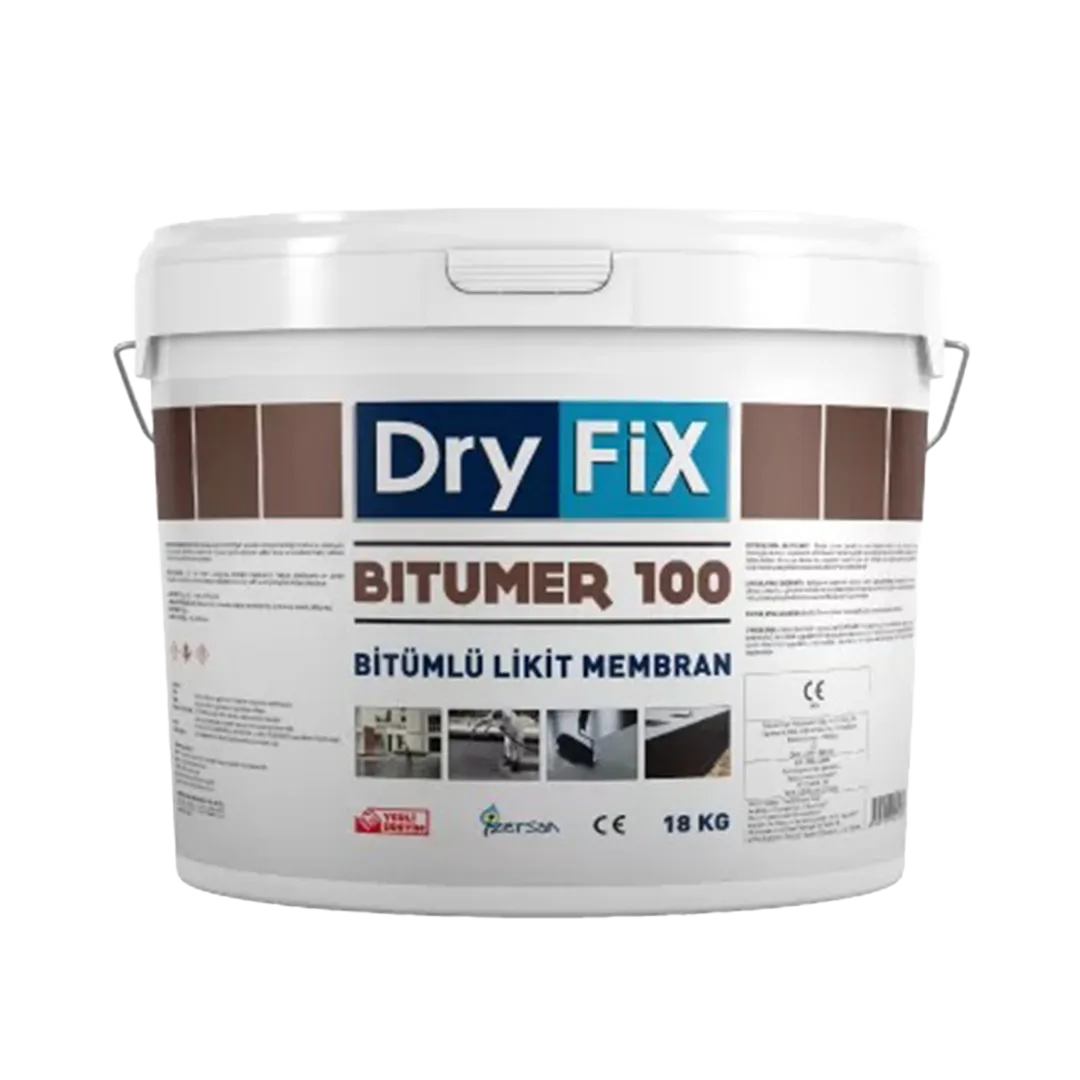
Dryfix Bitumer 100 (Single Component)
An elastic waterproof coating applied with brush or roller. Easy to use and highly flexible.
Dryfix Bitumer 100 2K (Two Component)
Commonly used for foundation walls. It offers high crack-bridging ability and strong adhesion.
8. Tar-Based Waterproofing
Tar-based waterproofing is one of the oldest methods. However, it has largely been replaced by modern liquid-applied systems with higher performance and flexibility.
9. Application Areas of Waterproofing Materials
- Exterior wall waterproofing
- Building foundations
- Basement walls
- Roofs and terraces
- Wet areas
10. Roof Waterproofing Systems
Common roof waterproofing systems include:
- Elastomeric acrylic-based products
- Bituminous coatings
- Polyurethane systems
- Cement-based two-component systems
- PVC membrane systems
11. Terrace Waterproofing and Pedestrian Traffic
Walkable terrace systems must have:
- High abrasion resistance
- UV resistance
- Flexible and waterproof structure
12. Tile-Over Terrace Waterproofing
For tile-covered surfaces without demolition, liquid glass systems such as Glassy 100 can be used. This preserves the existing tile appearance while ensuring waterproofing.
13. Thermal and Waterproofing Systems for Terraces
For combined heat and waterproofing performance, products such as Dryfix Thermal 100 Roof provide dual functionality in a single application.
14. Information & Technical Support
Waterproofing applications require professional execution and correct product selection. Technical consultation is recommended for selecting the most suitable system for your project.