



Epoxy-Based Textured Topcoat with Orange Peel Pattern DFC – 400
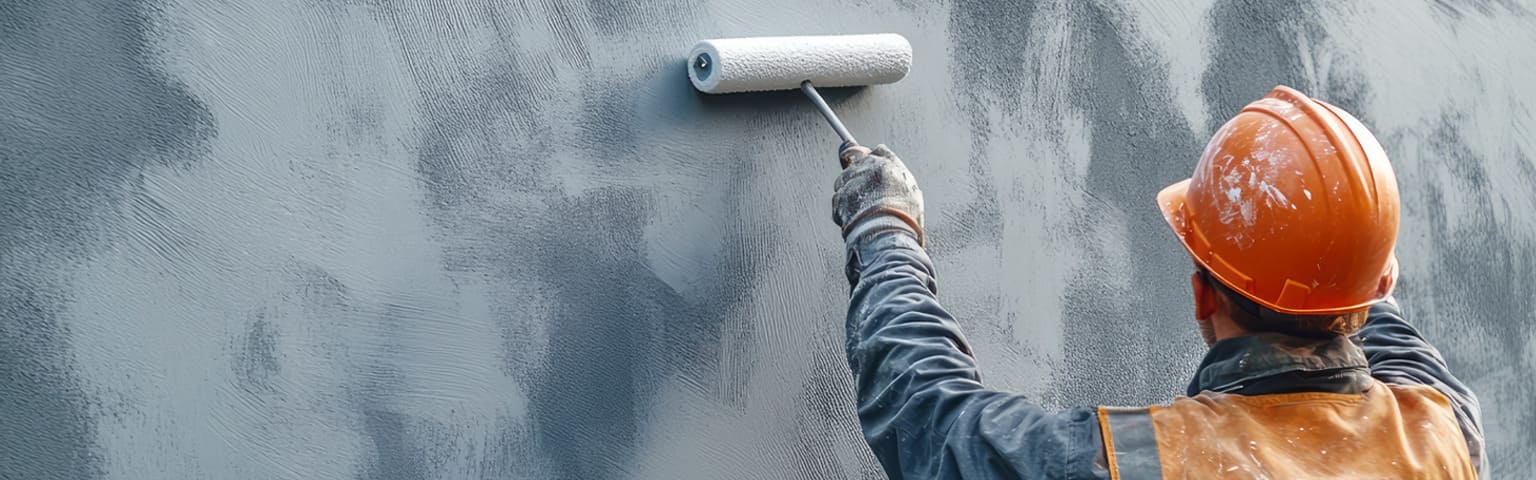

DryFiX DFC-400 Premium Textured (Orange Peel) Epoxy Topcoat
Aesthetics, Maximum Occupational Safety, and Invincible Infrastructure in Industrial Floors
DryFiX DFC-400 is a textured (orange peel finish) epoxy topcoat armor formulated to the highest engineering standards for projects characterized by heavy pedestrian traffic, wet working conditions, and heavy-tonnage vehicular movement. Unlike standard epoxy coatings, it fully complies with Occupational Health and Safety (OHS) regulations thanks to the special grainy (stippled/profiled) topography it creates on the surface.
It minimizes occupational accidents caused by slipping and falling, especially in food production facilities (meat/dairy integrated plants), automotive assembly lines, aircraft hangars, hospital corridors, and logistics warehouses with wet floors where water, oil, or chemical spills frequently occur. It shortens the braking distance by ensuring that tires grip the floor perfectly (anti-slip) on the turning ramps of indoor parking lots and forklift routes. With its high mechanical shock absorption, resistance to aggressive chemicals, and dirt-repellent semi-matte aesthetic texture, it extends the lifespan of floors for decades under harsh site conditions. Furthermore, its textured nature perfectly camouflages minor undulations and optical defects on the concrete substrate.
DFC-400 Technical Specifications and Performance Values
| Performance Criterion | Technical Values and Details |
| Appearance and Finish | Semi-Matte / Textured (Characteristic Orange Peel Pattern) |
| Color Options | Flawless pigmentation in all corporate and industrial RAL color codes |
| Solid Content (By Weight) | 95% (Wet film thickness equals dry film thickness after application; no volume loss) |
| Mixture Density | 1.60 ± 0.05 g/cm³ |
| Mixing Ratio (By Weight) | 7 : 1 (7 Parts Component A Resin / 1 Part Component B Hardener) |
| Packaging (As a Set) | 24 kg Two-Component Set (21 kg Component A + 3 kg Component B) |
| Consumption (Coverage) | 0.400 - 0.500 kg/m² depending on desired texture depth and substrate profile |
| Application Equipment | Flat Steel Trowel (for spreading) and Epoxy Texture Roller (for patterning) |
| Pot Life | 20 Minutes (at +25°C ambient temperature - Exothermic reaction rate must be considered) |
| Recoat Time (Between Coats) | Min. 12 Hours - Max. 24 Hours (at +25°C ambient temperature) |
| Surface Drying (Touch Dry) | 24 Hours (at +25°C ambient temperature) |
| Full Chemical and Mechanical Cure | 7 Days (Preparation time for heavy-tonnage industrial use and harsh chemical contact) |
| Shore D Hardness | 75 (7 Days / 25°C - Superior scratch resistance against forklift and pallet jack traffic) |
| Reaction to Fire Class | Cfl (Full compliance with international flame retardant standards for floorings) |
| Shelf Life | 1 Year (12 Months) in unopened, undamaged original packaging, protected from heat and light |
Professional Application Instructions and Site Procedures
1. Substrate Condition, Surface Preparation, and Repairs
The undisputed first rule of achieving a permanent mechanical interlock (adhesion) is that the substrate must be load-bearing, clean, profiled, and dry.
- The concrete surface to be coated must be completely free of all chemical/physical barriers such as paint flakes, machine oil, grease, weak cement laitance, dust, tire marks, and frost that would reduce adhesion to zero.
- Surface preparation must be carried out mechanically using professional diamond grinding machines, scarifiers, or shot-blasting methods, depending on the size of the project.
- Capillary cracks, pits, and joint gaps that appear after surface preparation must be filled and leveled with epoxy-based repair mortars or putties before proceeding to the topcoat application.
- The moisture content of the substrate must be measured using Tramex or Carbide test instruments and should be at a maximum of 4-5%. All dust generated after the process must be removed from the system using industrial vacuum machines with high suction power.
2. Component Integration (Mixing Preparation and Exothermic Control)
DryFiX DFC-400 is a high-performance, two-component epoxy system. After Component A (Resin) is briefly stirred within its own container to ensure a fully homogeneous distribution of pigments, Component B (Hardener) must be added completely (scraping the container) into the main component.
- Important Rule: The 7:1 mixing ratio must be strictly adhered to on-site; the packages must never be divided for partial use. Otherwise, uncured (soft) localized defects will occur on the floor.
- The mixture must be stirred continuously for at least 3-4 minutes using a low-speed epoxy mixer (300-400 rpm) to avoid trapping air (creating air bubbles) in the material. When the two components combine, they heat up and initiate an exothermic chemical reaction. Since the pot life of the material is 20 minutes, the mixture must be poured rapidly onto the surface without waiting in the bucket once mixing is complete.
3. Multilayer Coating System and Cross-Texturing Process
- System Infrastructure: Before proceeding with the DFC-400 topcoat application, the raw concrete floor must be deeply saturated with DryFiX DFC-100 Epoxy Primer and broadcasted with silica sand. After sweeping the excess sand, depending on the thickness requirements of the project, DryFiX DFC-300 Mid-Coat (scratch coat) should be applied to seal all pores in the substrate and create a load-bearing backbone.
- Characteristic Pattern Application: The DFC-400 topcoat stage begins 12-24 hours after the mid-coat application. The prepared epoxy mixture is spread uniformly and seamlessly onto the floor using a flat steel trowel. Immediately after the spreading process is completed (before the material completes its reaction), the entire surface is rolled with a special texture roller to impart that characteristic "orange peel" appearance and high anti-slip property to the coating.
- Mastery Note: To ensure aesthetic integrity and prevent undulations in the pattern, the texture roller application must be done using the "cross-rolling" technique (first transversely, then longitudinally), without lifting the roller from the surface and always moving in the same direction.
4. Critical Site Conditions, Dew Point, and Concrete Tolerances
- The underlying concrete to be coated must meet the standards of a minimum compressive strength of 25 N/mm² and a minimum surface pull-off strength of 1.5 N/mm².
- Ambient and surface temperatures must absolutely not be below +10°C. Even more critically, to eliminate the risk of condensation (sweating), the surface temperature must be at least 3°C above the measured Dew Point. Application should be avoided in high relative humidity environments (above 80%).
- Even if the floor is fully cured and hardened, hydrostatic water pressure or moisture originating from the foundation of the building (negative side) can push the system from below, causing it to detach from the surface (blistering). In such risky substrates, foundation waterproofing measures must be fully implemented prior to coating.
5. HSE, Environmental Procedures, and Safe Storage
- This product is strictly for industrial, professional use and is subject to site OHS rules.
- Continuous and strong ventilation (mechanical or natural) must be provided in enclosed application areas, even if there are no solvent vapors (high solid content product).
- Skin and eye contact must be strictly avoided; the material must not be inhaled or swallowed. Standard PPE equipment such as nitrile gloves, active carbon filter masks, and safety goggles must be used during work.
- Refer to the product's Material Safety Data Sheet (MSDS) for fire, explosion, spillage, and first aid procedures. Used steel trowels and rollers must be thoroughly cleaned with appropriate epoxy thinners before the epoxy hardens.
- Waste Management: Leftover or contaminated packaging must not be disposed of in nature. The remaining Component A and B at the bottom of the bucket must be reacted and allowed to cure, then disposed of as non-hazardous solid waste in accordance with local regulations.
- Product packaging must be stacked on wooden pallets in enclosed, moisture-free storage areas between +5°C and +35°C; strictly protected from direct sunlight, extreme heat, and frost.
Our team will contact you as soon as possible to offer the most suitable solution for your needs.